

If you’re craving a rich, creamy, and deeply satisfying dish that feels fancy yet comes together with humble ingredients, mushroom pea risotto is your go-to recipe. This Italian classic isn’t just a meal; it’s an experience—each spoonful delivers earthy mushrooms, sweet pops of peas, and silky rice that melts in your mouth. Whether you’re a home cook or a seasoned foodie, mastering this comforting risotto will elevate your dinner game.
You’ll learn what makes this dish so special, get foolproof cooking instructions, discover tips to elevate it, explore vegan twists, and get expert answers to your top questions like how long is mushroom risotto good for and can it be made in advance.
table of content
PART 1: What Is Mushroom Pea Risotto?
Origins of Risotto: A Quick Look into Italian Cuisine
Risotto is a traditional Italian dish that originated in Northern Italy, particularly the Lombardy and Veneto regions. Its foundation is short-grain rice, typically arborio, known for its ability to release starch and create a naturally creamy texture without needing heavy cream. Unlike other rice dishes, risotto is known for its technique—slowly adding hot broth and stirring constantly.
Over the years, risotto evolved into a canvas for a variety of flavors, and mushroom pea risotto has become a beloved version, praised for its earthy depth and sweet freshness. This dish reflects Italian culinary values: simplicity, quality ingredients, and bold flavors.
What Makes Mushroom Pea Risotto Unique?
The marriage of mushrooms and peas in risotto is both harmonious and balanced. Mushrooms, especially cremini, porcini, or shiitake, bring an earthy umami flavor, while the peas contribute a natural sweetness and pop of color. Together, they turn a basic rice dish into a multi-dimensional experience.
Unlike plain risotto, mushroom pea risotto adds layers of texture and visual appeal. The soft mushrooms, creamy rice, and tender peas make it a favorite for weeknight dinners and dinner parties alike.
Why You’ll Love This Creamy Combination
Here’s why this dish will become a staple in your recipe rotation:
| Feature | Why It Matters |
|---|---|
| Creamy Texture | Achieved without cream—just proper stirring and rice starch |
| Umami-Rich | Thanks to sautéed mushrooms |
| Naturally Sweet | The peas add a light, refreshing contrast |
| Customizable | Add truffle oil, parmesan, or fresh herbs |
| Comfort Food Staple | Warm, filling, and soul-soothing |
It’s vegetarian-friendly, easy to make gluten-free, and can even be made vegan. You’ll not only learn to cook it well but also discover ways to make it exciting every time.
PART 2: Essential Ingredients for a Flavorful Mushroom Pea Risotto
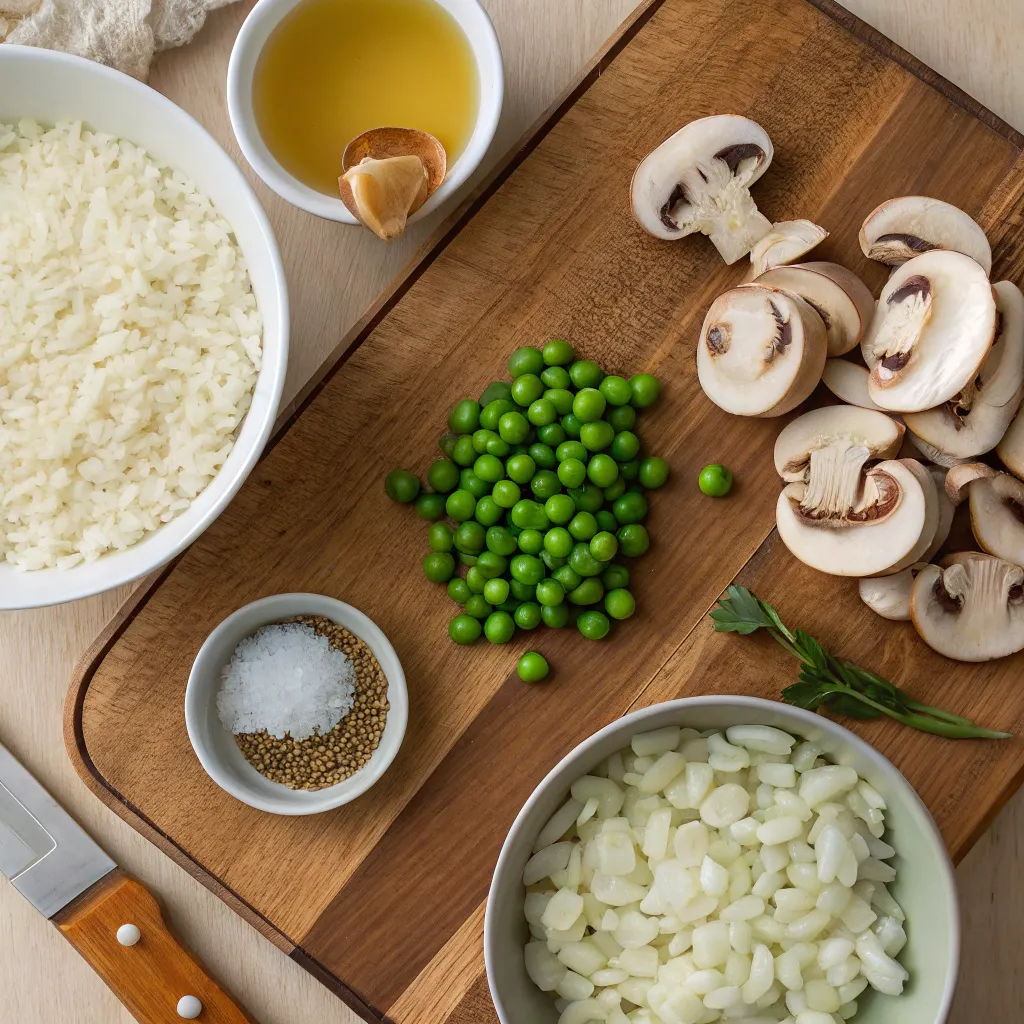
Creating a memorable mushroom pea risotto starts with choosing the right ingredients. Each component plays a vital role in shaping the dish’s texture, aroma, and flavor profile. From the type of rice to the variety of mushrooms, here’s what you need to know before you start stirring.
Choosing the Right Rice: Arborio, Carnaroli, or Vialone Nano
Not all rice is created equal—especially when it comes to risotto. To achieve that classic creamy finish, you need short-grain rice with high starch content. Let’s break down the top three options:
- Arborio Rice
The most common risotto rice in American kitchens, Arborio is easy to find and produces a rich, creamy texture. It absorbs flavors well but can become a bit mushy if overcooked. - Carnaroli Rice
Often considered the “king” of risotto rice, Carnaroli holds its shape better and yields a slightly firmer texture, making it perfect for those who like a little bite (al dente) in their risotto. - Vialone Nano Rice
This is another excellent Italian variety, prized for soaking up broth beautifully while maintaining an ultra-creamy finish.
Whichever you choose, remember: never rinse the rice before cooking. You want to keep that starch intact for the signature risotto creaminess.
Mushroom Varieties That Work Best
Mushrooms are the backbone of mushroom pea risotto. Their umami depth creates a savory, earthy base that complements the delicate sweetness of peas.
Here are some top mushroom choices:
| Mushroom Type | Flavor Profile | Best Use |
|---|---|---|
| Cremini | Mildly earthy and meaty | Widely used and accessible |
| Portobello | Rich, intense umami | For heartier risottos |
| Porcini (dried or fresh) | Deep, woodsy flavor | Adds gourmet flair |
| Shiitake | Savory and aromatic | Great for a richer dish |
| Oyster mushrooms | Delicate and tender | Perfect for lighter risottos |
For a more layered taste, combine a few types. You can sauté them with olive oil or butter before incorporating into your risotto.
Fresh or Frozen Peas: What’s Ideal?
Peas bring brightness and a sweet counterbalance to the earthy mushrooms. The debate between fresh and frozen peas is common, and both work beautifully, but here’s the breakdown:
- Frozen Peas:
Readily available year-round, frozen peas retain their flavor and texture well. Add them in the last 5 minutes of cooking to avoid mushiness. - Fresh Peas:
If you’re lucky enough to have fresh peas in season, go for it. They offer a slightly crisper bite and more vibrant flavor.
No matter which type you use, the key is to avoid overcooking. Peas should retain their color and pop when you bite into them.
Bonus Flavor Essentials:
In addition to the core trio—rice, mushrooms, and peas—here are a few extras that truly enhance the final dish:
- Onion or shallot: Adds a mellow sweetness to the base.
- Garlic: Just a touch enhances the savoriness.
- White wine: Used to deglaze the pan, adding brightness.
- Parmesan cheese: A must for creamy, nutty richness.
- Vegetable or chicken broth: Choose low-sodium for better control.
- Butter and olive oil: Used together, they balance richness and depth.
Each of these ingredients supports the focus keyword—mushroom pea risotto—by enriching the dish’s flavor and texture, turning simple components into something extraordinary.
PART 3: Step-by-Step Guide to Making the Perfect Mushroom Pea Risotto
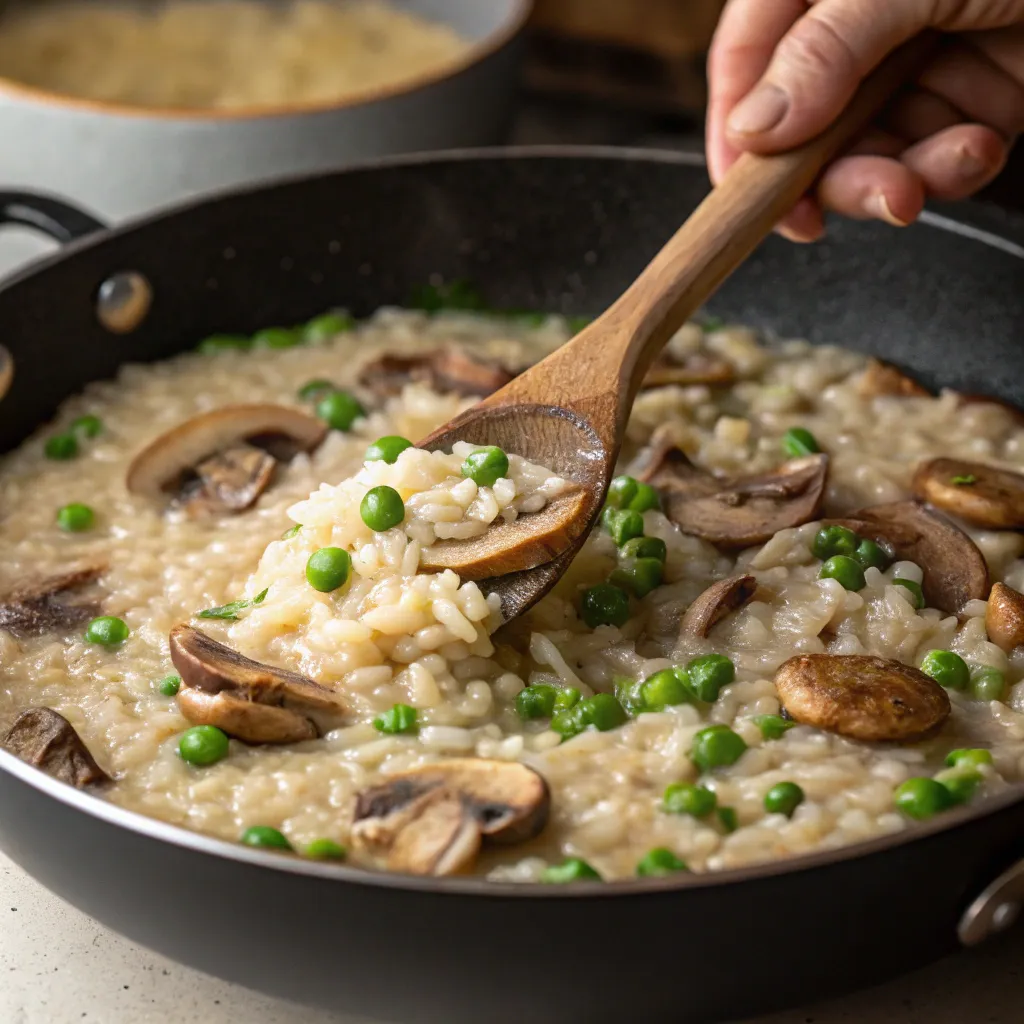
Making risotto might seem intimidating, but once you understand the rhythm of stirring and simmering, it becomes a relaxing and rewarding experience. Here’s a foolproof step-by-step guide to create a silky, flavorful mushroom pea risotto in your own kitchen.
Prepping Your Ingredients Like a Pro
Before you even turn on the stove, prep everything. Risotto requires constant attention, so there’s no time for chopping halfway through.
Basic prep checklist:
- Dice your onion or shallot finely.
- Clean and slice mushrooms evenly.
- Measure out your arborio (or other risotto) rice.
- Grate your parmesan cheese in advance.
- Keep your broth warm on the stovetop in a separate pot.
- Set peas aside—no need to cook them yet.
This mise en place approach ensures a smooth cooking process and prevents overcooking any element, especially the rice.
The Toasting and Deglazing Technique
Start by heating a mix of butter and olive oil in a heavy-bottomed pan or skillet. Add onions or shallots and cook over medium heat until translucent—don’t rush this step, as it forms the flavor base.
Once your aromatics are soft, stir in the mushrooms. Cook until they release their moisture and brown slightly, developing deep umami flavor. Now add the rice.
Toasting the rice is essential. Stir the rice constantly for about 2 minutes until the edges turn translucent. This helps lock in structure, so it doesn’t turn to mush later.
Next, deglaze with white wine. Pour it in and stir until the liquid has nearly evaporated. This adds acidity and a subtle depth to the mushroom pea risotto.
Stirring and Simmering to Creamy Perfection
Now begins the heart of risotto-making. Add a ladleful of warm broth to the rice and stir gently. When most of the liquid is absorbed, add another ladle. Continue this process slowly—don’t rush or pour in too much liquid at once.
Keep stirring frequently. This friction helps release the rice’s starch, creating the dish’s signature creamy texture without adding cream.
After about 15 minutes, check for doneness. The rice should be tender with a slight bite at the center—what Italians call al dente. At this point, stir in your peas. Add them near the end to preserve their bright color and natural sweetness.
In the final few minutes, stir in grated parmesan and a knob of butter to finish the dish. This enriches the flavor and gives your risotto a silky finish.
Taste and adjust with salt, pepper, or even a squeeze of lemon juice for brightness. Serve immediately—risotto waits for no one.
Pro Tips for Success:
| Step | Pro Tip |
|---|---|
| Toasting Rice | Don’t skip this—it enhances flavor and texture. |
| Broth Temp | Always keep broth warm to maintain even cooking. |
| Stirring | Don’t stop! Stirring is key to a creamy risotto. |
| Finish Strong | Add cheese and butter off heat for the best texture. |
With practice and patience, you’ll master mushroom pea risotto and even feel confident enough to create your own variations.
PART 4: Tips to Make Mushroom Risotto More Interesting
Even though mushroom pea risotto is already a satisfying and comforting dish, there are countless ways to take it from delicious to unforgettable. Whether you’re preparing it for a dinner party or just want to elevate your everyday cooking, these creative techniques and ingredient upgrades will transform your risotto into a gourmet-level experience.
Flavor Enhancers: White Wine, Truffle Oil, and Fresh Herbs
One of the easiest ways to elevate your mushroom pea risotto is by layering flavors.
- White Wine:
Deglazing your pan with a dry white wine (like Pinot Grigio or Sauvignon Blanc) brings acidity and brightness, balancing out the richness of the dish. - Truffle Oil or Truffle Salt:
A drizzle of truffle oil just before serving adds a luxurious, earthy depth that complements the mushrooms perfectly. Be careful—just a few drops go a long way. - Fresh Herbs:
Chopped parsley, thyme, or chives bring freshness and color to your mushroom pea risotto. You can also infuse the broth with rosemary for a subtle herbal undertone.
These small additions give your risotto a restaurant-quality finish without changing the heart of the dish.
Add-Ins: Spinach, Parmesan Crisps, and Roasted Garlic
Want to add texture and complexity to your mushroom pea risotto? Try these flavorful enhancements:
- Baby Spinach:
Stir in a handful of baby spinach during the last few minutes of cooking. It wilts perfectly and adds a nutritional boost. - Parmesan Crisps:
Make your own by baking small piles of shredded parmesan until golden and crisp. Use them as a garnish to add crunch and flair. - Roasted Garlic:
Mix in a few cloves of mashed roasted garlic to deepen the umami flavor of your mushroom pea risotto. It blends beautifully with the mushrooms and boosts the savoriness. - Lemon Zest or Juice:
A touch of lemon juice or zest at the end brightens up the dish and balances the creaminess.
Each of these add-ins complements the earthy and sweet notes of mushroom pea risotto without overpowering them. They also help make each bite more dynamic.
Garnishing Like a Chef
Presentation matters. A beautifully plated mushroom pea risotto not only tastes great but also looks impressive. Here are a few chef-worthy garnishing ideas:
- Microgreens or Pea Shoots:
Add a small handful on top for elegance and a fresh crunch. - Shaved Parmesan or Pecorino:
Sprinkle paper-thin slices for visual appeal and extra flavor. - Cracked Black Pepper and Sea Salt Flakes:
A few twists of pepper and a sprinkle of flaky salt bring the dish to life just before serving. - A Drizzle of High-Quality Olive Oil:
This adds sheen and richness to the final presentation of your mushroom pea risotto.
Extra Ways to Enhance Your Mushroom Pea Risotto:
| Idea | Effect |
|---|---|
| Use homemade broth | Deepens base flavor |
| Add sun-dried tomatoes | Adds a tangy, sweet contrast |
| Stir in cream cheese | Boosts creaminess for a more indulgent finish |
| Top with sautéed wild mushrooms | Adds texture and gourmet touch |
| Serve with a poached egg | Makes it a complete, luxurious meal |
Final Thoughts
The beauty of mushroom pea risotto lies in its versatility. While the classic version is a dish to love on its own, don’t be afraid to get creative. Just remember to maintain balance—enhance the flavors without overwhelming the simplicity that makes it special.
Whether you’re keeping it traditional or experimenting with gourmet upgrades, mushroom pea risotto can easily become the centerpiece of your kitchen repertoire.
PART 5: Vegan and Dairy-Free Mushroom Pea Risotto Options
If you follow a plant-based diet or are dairy-sensitive, you can still enjoy the rich, creamy comfort of mushroom pea risotto. This dish is incredibly adaptable, and with a few smart swaps, you’ll have a version that’s just as delicious as the classic.
Replacing Butter and Cheese Without Losing Flavor
Traditional mushroom pea risotto relies on butter and parmesan for richness. But you don’t need dairy to get that creamy, indulgent texture and deep flavor.
Here’s how to substitute without compromise:
- Butter: Use vegan butter or olive oil for sautéing your onions, mushrooms, and rice. Olive oil offers a smooth, rich base and keeps the risotto light and heart-healthy.
- Parmesan Cheese: Nutritional yeast is the plant-based star here. It adds a nutty, cheesy flavor that mimics parmesan beautifully. Another option is using grated dairy-free cheese made from cashews or almonds.
- Creaminess: Add a tablespoon of cashew cream or oat milk toward the end for that final silky touch. Blended tofu or soaked, blended cashews also work well for a creamy consistency.
Using these swaps, your mushroom pea risotto remains every bit as decadent while being fully plant-based.
Vegan Broth and Nutritional Yeast Tips
The broth is the backbone of flavor in any risotto. While traditional versions may use chicken or beef broth, there are excellent vegan alternatives to elevate your mushroom pea risotto.
- Homemade Vegetable Broth: Simmer onions, carrots, celery, garlic, mushrooms, and herbs for a full-bodied flavor. Strain well and keep it warm during cooking.
- Store-Bought Options: Choose low-sodium, organic vegetable broths that are free from additives and preservatives. Look for ones labeled as “rich” or “slow-simmered” for deeper flavor.
- Boost with Umami: Add a splash of soy sauce, tamari, or a teaspoon of white miso to the broth. These introduce umami depth that mimics the richness of non-vegan versions.
- Nutritional Yeast: Stir in 2–3 tablespoons toward the end of cooking. This not only adds cheesiness but also thickens the risotto slightly, helping you get that signature creamy finish.
These vegan techniques ensure that your mushroom pea risotto remains hearty, savory, and satisfying without relying on dairy or animal products.
Popular Plant-Based Variations to Try
One of the great things about mushroom pea risotto is how flexible it is. If you’re eating vegan, there are plenty of ways to keep the dish fresh and exciting.
Try these creative plant-based variations:
- Lemon and Spinach Risotto: Add fresh baby spinach and a splash of lemon juice to brighten the dish.
- Roasted Cauliflower and Mushroom Risotto: Oven-roast small cauliflower florets and fold them into the risotto with your mushrooms and peas.
- Butternut Squash and Pea Risotto: Add roasted butternut squash cubes for a sweet, creamy addition that pairs well with mushrooms and peas.
- Herbed Mushroom Pea Risotto: Stir in basil, parsley, and thyme just before serving for a fresh, garden-like flavor profile.
- Smoked Paprika Mushroom Pea Risotto: Add a pinch of smoked paprika while sautéing the mushrooms to add warmth and complexity.
All of these options enhance the traditional mushroom pea risotto without compromising its soul-soothing appeal. They also allow you to align the dish with seasonal ingredients or dietary needs.
Summary Table: Vegan Ingredient Swaps
| Traditional Ingredient | Vegan Substitute | Purpose |
|---|---|---|
| Butter | Olive oil or vegan butter | Adds richness |
| Parmesan | Nutritional yeast or vegan cheese | Cheesy flavor |
| Heavy cream | Cashew cream or oat milk | Creamy texture |
| Chicken broth | Vegetable broth | Base flavor |
| Grated cheese topping | Toasted breadcrumbs or herbs | Crunch + contrast |
So whether you’re cooking for yourself or entertaining guests with different dietary needs, a vegan mushroom pea risotto is a guaranteed crowd-pleaser. It’s proof that comfort food doesn’t need to rely on animal products to be delicious and deeply satisfying.
PART 6: Storage and Reheating – How Long Is Mushroom Risotto Good For?
Once you’ve cooked a delicious pot of mushroom pea risotto, you might wonder how long you can keep it and the best way to enjoy leftovers without sacrificing texture or flavor. Proper storage and reheating techniques make all the difference when it comes to keeping this creamy dish tasting just as great the next day—or even the day after that.
Proper Storage Techniques for Freshness
When stored correctly, mushroom pea risotto stays safe and tasty for several days. The key is to cool it quickly and store it in the right container.
Follow these steps for safe and effective storage:
- Cool It Fast: After cooking, allow your risotto to cool to room temperature (no more than 1 hour at room temp). To speed up the process, spread it out on a baking tray.
- Use Airtight Containers: Store the cooled mushroom pea risotto in an airtight container to prevent it from drying out and absorbing fridge odors.
- Label It: Always write the date on your container to keep track of freshness.
- Refrigeration Time: You can safely store mushroom pea risotto in the refrigerator for 3 to 4 days. Beyond that, the quality declines and bacteria risk increases.
Keeping these steps in mind helps preserve the creamy texture and rich flavors of your mushroom pea risotto for enjoyable leftovers.
Best Ways to Reheat Without Losing Texture
Reheating risotto can be tricky. Done wrong, it becomes gummy or dry. But with the right method, you can bring it back to life—creamy, flavorful, and satisfying.
Here’s how to reheat your mushroom pea risotto the right way:
- Stovetop Method (Recommended):
- Place risotto in a nonstick pan.
- Add a splash of vegetable broth, water, or oat milk.
- Stir gently over low heat until warm and creamy.
- Microwave Method:
- Put the risotto in a microwave-safe bowl.
- Add 1–2 tablespoons of liquid (broth or water).
- Cover loosely and heat in 30-second intervals, stirring between each.
- Oven Method (Least Preferred):
This method works if reheating for a group. Place risotto in a baking dish, add a small amount of liquid, cover with foil, and bake at 300°F (150°C) for 10–15 minutes.
Pro Tip: Always add a bit of fat—like olive oil or vegan butter—when reheating. It brings back the glossy, creamy finish of freshly made mushroom pea risotto.
Freezing Mushroom Pea Risotto: Yes or No?
This is a common question—and a tricky one. While technically you can freeze mushroom pea risotto, it’s not always recommended if texture is your top concern.
Here’s the breakdown:
| Aspect | Details |
|---|---|
| Texture Change | Freezing causes the rice to break down slightly, making it mushier after thawing. |
| Best Practice | Freeze in individual portions in freezer-safe containers. |
| Shelf Life | Up to 2 months in the freezer. |
| Thawing Tip | Thaw overnight in the fridge, then reheat gently on the stovetop with added broth. |
If you choose to freeze it, make sure to undercook the risotto slightly before freezing. This helps retain better texture upon reheating.
Key Takeaways
- Mushroom pea risotto lasts 3–4 days in the fridge.
- Always store in airtight containers and refrigerate quickly.
- Reheat on the stovetop with added broth for best results.
- Freezing is possible but may slightly affect texture.
No matter how you reheat it, a properly stored mushroom pea risotto will still taste comforting, creamy, and delicious—just like the day you made it.
PART 7: Can Mushroom Pea Risotto Be Made in Advance?
Whether you’re hosting a dinner party or prepping meals for the week, one big question always comes up: Can mushroom pea risotto be made in advance? The answer is yes—with the right technique. While risotto is best enjoyed fresh off the stove, there are smart strategies for making it ahead without compromising on flavor or texture.
Planning for Meal Prep or Entertaining
Mushroom pea risotto doesn’t have to be a last-minute scramble. With a bit of planning, you can prep most of it in advance and still serve a dish that tastes like it was just made.
Here’s how to prep it smartly:
- Cook in Advance, Finish Later: Cook the risotto about 75–80% of the way (about 12–13 minutes of stirring), then stop. Spread it onto a baking sheet to cool quickly. This prevents it from overcooking.
- Store in the Fridge: Once cooled, transfer your mushroom pea risotto to an airtight container. Refrigerate for up to 24–48 hours before finishing.
- Finish Right Before Serving: Return the risotto to the pan, add hot broth, and finish cooking for 5–7 minutes. Stir in peas and cheese (or vegan alternatives) during this stage.
This two-step process helps preserve the texture and prevents the rice from becoming mushy. It’s a trick many professional chefs use to serve perfect risotto in restaurants.
Par-Cooking Risotto: A Smart Chef’s Hack
Par-cooking is your best friend when making mushroom pea risotto ahead of time. Here’s a quick rundown of how to do it:
- Sauté onions and mushrooms as usual.
- Add and toast your arborio rice.
- Start the usual ladling and stirring process.
- After about 12 minutes, when the rice is slightly tender but still firm in the center, remove it from heat.
- Spread on a tray and let it cool to room temperature quickly.
- Store covered in the fridge.
When ready to serve, reheat the risotto with a bit of broth and finish it to al dente. Add peas and parmesan (or nutritional yeast if vegan) toward the end for the best flavor.
Par-cooking allows you to do the heavy lifting early and still deliver a restaurant-quality mushroom pea risotto with ease.
Reheating Tips to Bring Back Creaminess
Even if you’ve fully cooked and stored your mushroom pea risotto, you can still reheat it like a pro. The key is to restore the creamy consistency.
Here’s how:
- Use Hot Broth or Water: When reheating, add warm broth a little at a time and stir gently to loosen the starch and create that silky texture.
- Low Heat Is Best: Avoid high heat. It can dry out the risotto or make it gummy. Keep the heat on low and stir slowly.
- Finish with Fats: Add a touch of butter, olive oil, or vegan cream at the end to bring back richness and gloss.
Even after being stored overnight, your mushroom pea risotto can be just as luscious and flavorful as when freshly made.
Why Advance Prep Works for Mushroom Pea Risotto
| Benefit | Details |
|---|---|
| Saves Time | Do the hard part before guests arrive or your busy day begins |
| Still Creamy | With correct reheating, texture stays silky |
| Flexible | Easy to finish and customize with extra ingredients at serving |
| Perfect for Parties | Avoid last-minute stress and serve like a pro |
So, yes—you absolutely can make mushroom pea risotto in advance. With a few simple tricks, you’ll serve up a dish that tastes freshly made and feels just as indulgent.
PART 8: Pairing Ideas – What to Serve with Mushroom Pea Risotto
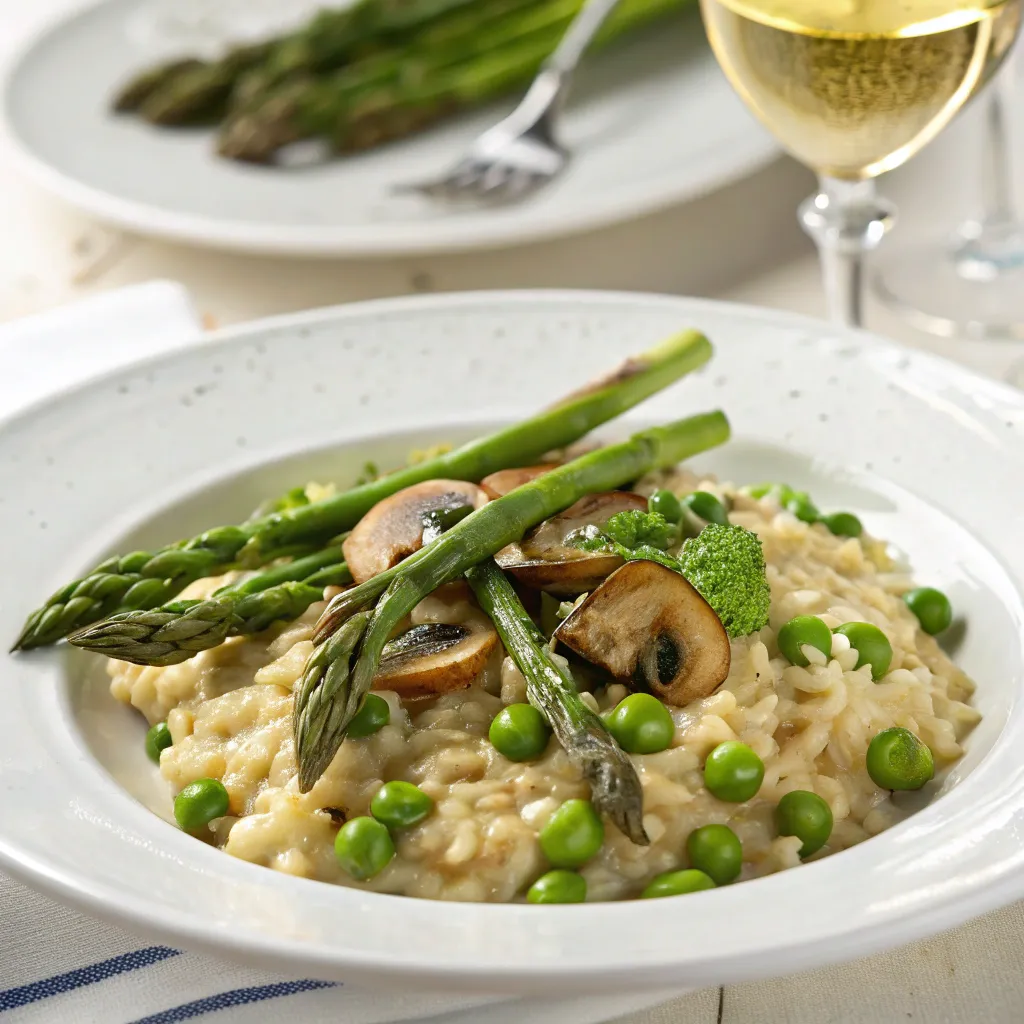
You’ve just made a velvety, savory bowl of mushroom pea risotto—now the big question is: what do you serve with it? Because it’s a rich and creamy dish, you’ll want to balance it with something crisp, acidic, or light to round out the meal. Whether you’re planning a weeknight dinner or a three-course evening, these pairings bring out the best in your risotto.
Ideal Wines and Beverages
Since mushroom pea risotto leans into earthy and creamy flavors, it’s important to pair it with beverages that cut through that richness and elevate the palate.
Top wine picks:
- Chardonnay (Unoaked): Crisp and clean, it cuts through the richness without overpowering the dish.
- Sauvignon Blanc: Its herbal notes match beautifully with peas and light herbs in the risotto.
- Pinot Noir: If you prefer red, this light-bodied wine pairs well with mushrooms, enhancing their umami.
- Prosecco: Bubbly and slightly sweet, it contrasts well with the savory nature of the dish.
Non-alcoholic options:
- Sparkling water with lemon or cucumber
- Herbal iced teas like mint or chamomile
- A splash of apple cider vinegar in cold water (great palate cleanser)
A well-chosen drink turns your mushroom pea risotto from a dish into an experience.
Side Dishes to Complement Creamy Risotto
Since mushroom pea risotto is rich and filling, you want to choose sides that offer contrast in either flavor or texture. Think crisp, fresh, tangy, or crunchy.
Here are some excellent sides:
- Arugula Salad with Lemon Vinaigrette: The peppery greens and acidic dressing balance the richness of the risotto.
- Roasted Asparagus or Broccolini: Lightly charred veggies add depth and bite to the creamy main.
- Crispy Kale Chips or Zucchini Fries: Perfectly crunchy and easy to make, these sides provide texture without being too heavy.
- Grilled Artichokes: Mildly nutty and tender, these bring a unique contrast to mushroom pea risotto.
Keep portions modest—your risotto should remain the star.
visit pinterest for more recipes
Salads, Meats, and Bread Options
Adding a light protein or some crusty bread can help turn your risotto into a complete meal, especially when serving guests.
Smart protein pairings:
- Grilled Chicken Thighs: Lightly seasoned with herbs and lemon to avoid overpowering the risotto.
- Garlic-Rubbed Shrimp: Quick to cook and adds a seafood twist that pairs especially well with peas.
- Seared Scallops: A fine-dining touch that complements the softness of mushroom pea risotto.
Bread ideas:
- Rustic Sourdough Slices: Toasted and rubbed with olive oil and garlic.
- Herb Focaccia: Soft, fragrant bread that sops up every last bite of risotto.
- Crostini with Vegan Pâté or Tapenade: Adds variety and texture.
Build the Perfect Plate
Here’s a sample menu for a satisfying, well-balanced meal centered around mushroom pea risotto:
| Course | Dish |
|---|---|
| Starter | Arugula and fennel salad with lemon dressing |
| Main | Creamy mushroom pea risotto with grilled chicken |
| Side | Roasted asparagus spears with sea salt |
| Bread | Warm sourdough with herbed olive oil |
| Drink | Sauvignon Blanc or lemon-infused sparkling water |
When paired well, mushroom pea risotto becomes the anchor of an elegant, memorable meal. Its rich, comforting base opens up endless pairing possibilities—from fresh greens to seared proteins and bright, citrusy drinks.
PART 9: Common Mistakes to Avoid When Cooking Mushroom Pea Risotto
Even the most experienced home cooks can slip up when making risotto. Because mushroom pea risotto relies on timing, texture, and technique, a few missteps can turn this creamy masterpiece into a sticky, bland mess. Fortunately, once you know what to avoid, you’re set up for consistent risotto success.
Overcooking or Undercooking the Rice
The most common mistake when making mushroom pea risotto is missing the perfect doneness of the rice.
- Overcooked Risotto: It becomes mushy, loses texture, and feels more like porridge than risotto.
- Undercooked Risotto: The rice stays hard in the center and doesn’t release enough starch, robbing the dish of its signature creaminess.
Fix it: Taste often. Around the 17-minute mark of simmering, test a grain—aim for al dente with a creamy coating.
Using the Wrong Type of Pan or Spoon
Not all kitchen tools are created equal—especially for mushroom pea risotto.
- Using a thin pan: Causes uneven heating, making it hard to control cooking speed.
- Using metal utensils: Can damage nonstick pans and won’t stir as gently as wood or silicone.
Fix it: Use a wide, heavy-bottomed pan (like stainless steel or cast iron) and a wooden spoon for steady, controlled stirring.
check this recipe out for more
Adding All the Broth at Once
This shortcut may seem tempting, but dumping all the liquid in at once ruins the risotto-making process. The gradual addition of warm broth is what gives mushroom pea risotto its luxurious texture.
Fix it: Ladle in one scoop of hot broth at a time, stirring gently until it’s absorbed before adding more.
This allows the rice to release starch gradually—exactly what gives mushroom pea risotto its creamy personality.
Skipping the Stirring
You’ve probably heard it before: “Risotto needs constant stirring.” And it’s true—this isn’t a walk-away dish.
- Stirring activates starch and keeps the rice cooking evenly.
- Without stirring, the rice can stick to the pan, cook unevenly, or burn.
Fix it: Stir regularly, especially during broth additions. Don’t walk away for more than 1–2 minutes at a time.
Adding Peas Too Early
Peas are delicate and cook quickly. If you add them too early, they lose their vibrant color and become mushy.
Fix it: Stir peas into your mushroom pea risotto during the last 5 minutes of cooking or even right before turning off the heat.
This keeps their color bright and texture snappy, balancing the richness of the mushrooms and rice.
Overloading with Cheese or Butter
While fat enhances creaminess, too much of it can weigh down the dish, making it greasy instead of velvety.
Fix it: Add a modest amount of parmesan or vegan cheese at the end and taste before adding more. The creaminess should come primarily from the rice starch.
Final Summary Table: Mistakes to Watch Out For
| Mistake | Why It Hurts Your Risotto | Easy Fix |
|---|---|---|
| Overcooking rice | Makes risotto mushy | Taste for doneness |
| Dumping broth in all at once | No creaminess | Add in stages |
| Not stirring enough | Uneven cooking | Stir gently and regularly |
| Peas too early | Dull color, mushy texture | Add near the end |
| Too much cheese | Heavy and greasy result | Balance with restraint |
| Wrong tools | Uneven cooking | Use wide pan and wooden spoon |
Avoiding these errors will ensure your mushroom pea risotto turns out restaurant-worthy every single time—creamy, flavorful, and perfectly textured.
Frequently Asked Questions About Mushroom Pea Risotto
How to make mushroom risotto more interesting?
There are several ways to elevate your mushroom pea risotto and add new dimensions to its flavor:
- Add truffle oil at the end for a gourmet finish.
- Incorporate roasted garlic into the base for deeper flavor.
- Top with crispy shallots or parmesan crisps to add crunch.
- Stir in spinach, leeks, or sun-dried tomatoes for variety.
- Use different mushrooms—try shiitake, oyster, or porcini for complexity.
Even a simple sprinkle of lemon zest or fresh thyme can make your mushroom pea risotto pop.
How long is mushroom risotto good for?
Mushroom pea risotto stays fresh in the fridge for 3 to 4 days when stored in an airtight container. Make sure it cools to room temperature before sealing it up. To reheat, add a bit of broth or water and stir gently over low heat until creamy again.
It’s best eaten within a couple of days to preserve texture and flavor.
Can you add peas to mushroom risotto?
Absolutely. Peas and mushrooms are a classic and delicious pairing. The peas add a sweet, fresh contrast to the earthy mushrooms and starchy rice. For best results, stir the peas into your mushroom pea risotto in the last 5 minutes of cooking to preserve their color and bite.
Frozen peas work just as well as fresh, making this combo easy to enjoy year-round.
Can mushroom risotto be made in advance?
Yes, with the right method, mushroom pea risotto can be made ahead of time. The best approach is to par-cook the risotto—about 80% done—then cool and refrigerate. When ready to serve, return it to the stove, add warm broth, and finish cooking.
You can also make the full recipe and reheat gently with broth, though the texture may be slightly softer than fresh risotto.
Conclusion
Mastering mushroom pea risotto doesn’t require a culinary degree—just a bit of patience, quality ingredients, and the right technique. From selecting the ideal rice to perfecting the stir, this comforting dish offers both simplicity and elegance on one plate.
You’ve learned how to cook it step by step, store and reheat it properly, customize it to your taste, and even make it vegan. Whether served for a cozy dinner or a special gathering, mushroom pea risotto is sure to impress.
Now it’s time to get into your kitchen and stir up something truly satisfying.